Understanding Hospital Admission Insurance Denials: Why Utilization Management is Important

This is part 1 of a 3-part blog series on why outdated utilization management (UM) is costing your health system millions. This part talks about the current state of denials and why they are increasing. Part 2 will explain how to identify when you have a UM problem and part 3 will explain why you should consider AI-enhanced tools.
Hospital admission insurance denials are no longer a rare frustration—they’ve become a defining challenge for health systems nationwide. Each denied claim represents lost revenue, delayed cash flow, and added administrative burden. More importantly, every dollar blocked by payers is a dollar that can’t be reinvested into patients, staff, or critical initiatives.
The pressure is mounting because insurers are investing heavily in automation and artificial intelligence (AI) to scrutinize claims. Meanwhile, hospitals continue to rely on outdated utilization management (UM) processes and solutions that cannot keep pace. The result is a widening gap between payer sophistication and health system defenses.
Hospital admission insurance denials are climbing, and every denied claim drains both revenue and resources.
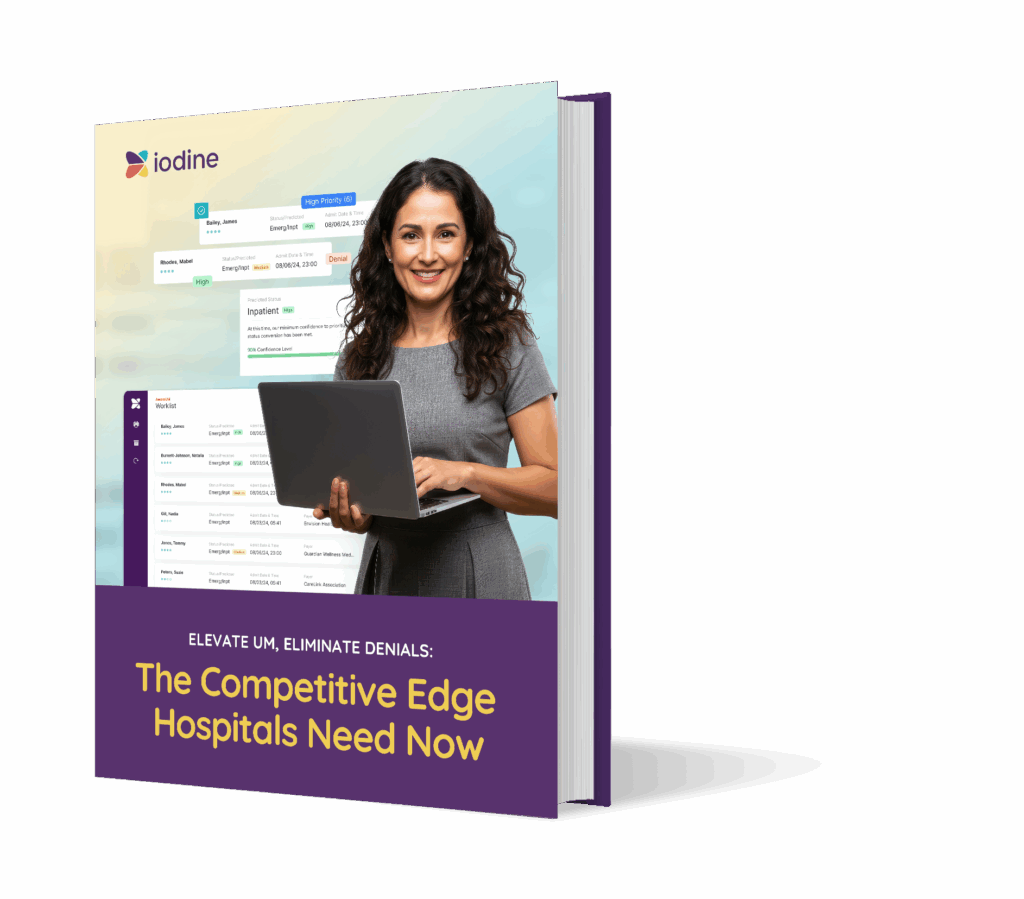
Want all three parts of our UM blog series, plus bonus content?
Download the complete eBook.
The Denial Problem is Growing
Denials are climbing everywhere. The data tells a stark story:
- 89% of hospitals reported an increase in claim denials between 2020 and 2023, with over half calling the rise “significant.”
- 8 cents of every dollar billed to commercial insurers is either never received or later taken back.
- 31% of inpatient claims are still unpaid 90 days after submission.
- The cost of fighting denials now exceeds $25 billion annually, much of it tied to labor.
- Between 2017 and 2022, hospital denial rates increased by more than 20%—and the trend has not slowed.
Behind these numbers is an arms race between payers and providers. Payers are leveraging advanced technologies—especially AI—to scrutinize every claim and every line item in milliseconds. Hospitals, by contrast, often respond with outdated, manual processes or semi-automated systems that haven’t been significantly overhauled in years.
Outdated UM Impacts More Than Just Denials
Insurance denials are the most visible consequence of a strained UM system, but they aren’t the only risk. Hospitals also face:
- Compliance investigations and audits.
- Negative impacts on quality metrics.
- Inaccurate patient statuses.
- Wasted clinical time chasing down missing information.
Each of these issues compounds the financial strain and diverts resources from patient care. In short, hospital admission insurance denials are not a standalone problem—they’re a symptom of an outdated approach to utilization management.
Redefining Compliance with AI and Automation
Hear how R1 and Iodine are simplifying compliance— and helping organizations outperform peers.
Medicare Advantage is Driving the Denial Problem
One of the biggest accelerants of denial pressure is the explosive growth of Medicare Advantage (MA). Enrollment now surpasses half of the Medicare-eligible population. But with that growth has come higher denial rates and more rigid pre-authorization requirements.
Research shows that denial rates under Medicare Advantage are three times higher than under traditional Medicare. A 2022 audit even found that 13% of denied MA claims would have been covered under standard Medicare. This reflects the underlying payment model: MA plans operate under a capitated system that rewards denying or delaying care.
For hospitals, this translates to more red tape, inconsistent application of CMS rules, and a heavier administrative lift to secure reimbursement.
Utilization Management: The First Line of Defense for Hospital Admission Insurance Denials
While hospitals can’t control payer behavior, they can control how well their UM processes stand up to it. A strong utilization management program ensures that care is:
- Clearly documented as medically necessary.
- Aligned with payer requirements.
- Properly authorized in a timely fashion.
When UM functions smoothly, many denials are prevented before a claim is ever submitted. But when UM is outdated or inconsistently applied, revenue leaks through cracks in the system. Hospitals end up delivering care without reimbursement, battling denials after discharge, and stretching thin staff even further with time-consuming appeals.
The Solution: Updated, AI-Enhanced UM Tools
The rise of hospital admission insurance denials signals that UM can no longer be treated as a back-office compliance task. It has become core financial infrastructure. To keep pace with payer algorithms, hospitals need more than manual review—they need tools that provide real-time visibility, automate repetitive tasks, and surface high-risk cases before denials occur.
Hospitals must modernize their UM processes and leverage AI to reduce denials, strengthen compliance, and protect revenue streams. The goal isn’t just to fight denials more effectively, but to prevent them at the source.
Redefining Compliance with AI and Automation
Hear how R1 and Iodine are simplifying compliance— and helping organizations outperform peers.
Bottom line: hospital admission insurance denials aren’t going away. But with smarter, technology-enabled UM, hospitals can shift from playing defense to reclaiming control over their financial future.